
How to Choose a Reliable Rhinestone Manufacturer for Your Brand
How to Place a First Trial Order Without Committing to Container Volume
You do not need to commit to a container to find out whether a rhinestone supplier is right for your business. A staged trial process helps you test product quality, application performance and production consistency before scaling up.
You have found a rhinestone supplier whose products look suitable for your collection. The quotation is reasonable, the communication is promising, and the supplier says they can manufacture the design you need.
Then comes the MOQ.
Perhaps the supplier wants a larger order than you are comfortable placing. Perhaps your design requires custom Claw Rhinestones with a new mould. Or perhaps you simply do not know whether the stones will look right once they are attached to the actual garment.
The problem is not necessarily the supplier's price. It is the risk of committing to inventory before you have enough evidence to make a purchasing decision.
The solution is to divide the first order into four stages. Each stage should answer a specific question before you spend more money.
Four stages from sample to bulk — and what each stage actually tests
A first rhinestone order should not be treated as one large purchasing decision. It should be a sequence of smaller decisions, with each step reducing a different type of uncertainty.
Think of the process as four separate checkpoints: product appearance, production suitability, finished-garment performance and repeat-order readiness.
Sample Selection: Does the Product Match Your Expectations?
Start with existing samples or small sample quantities. At this point, you are checking whether the material, shape, size, colour, finish and overall appearance are suitable for your design.
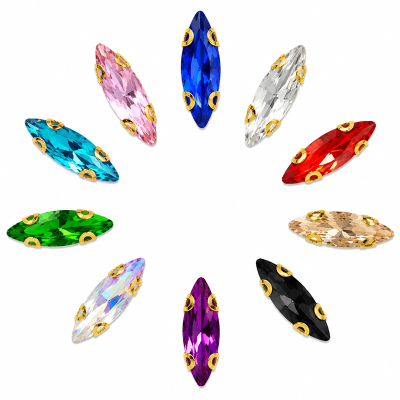
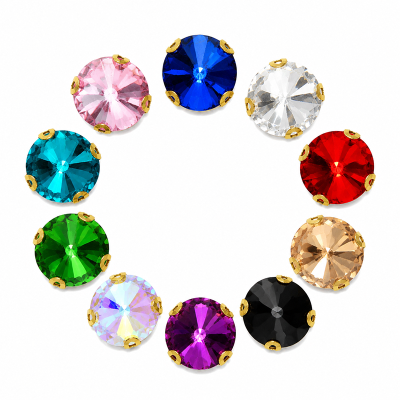
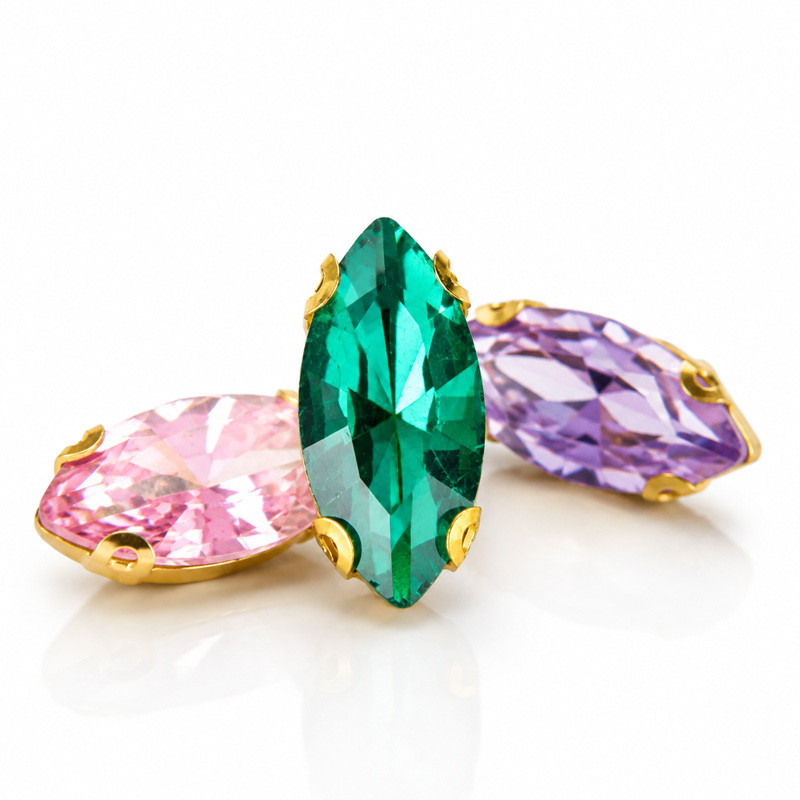
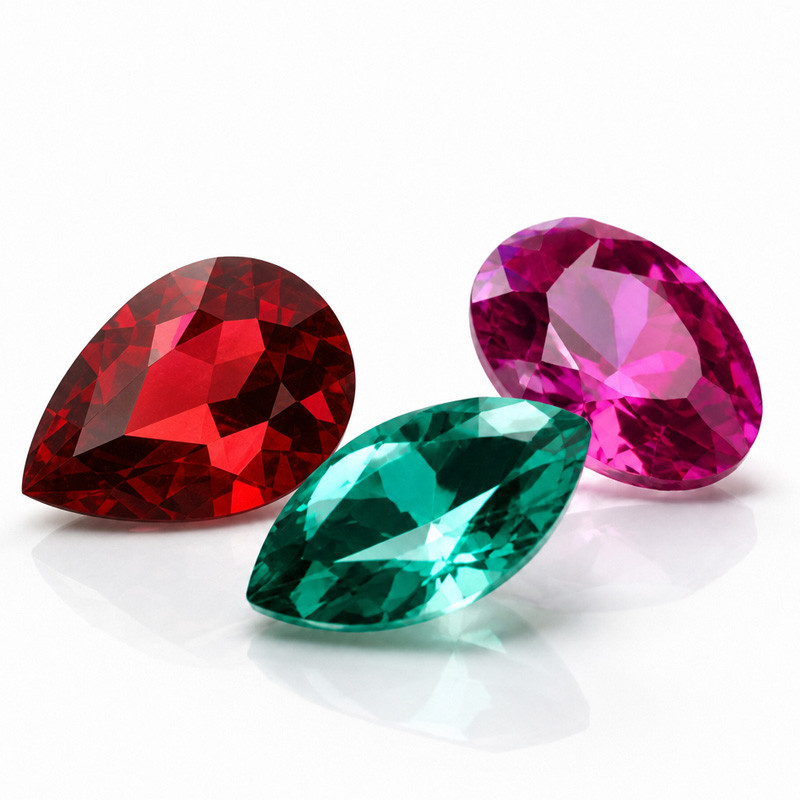
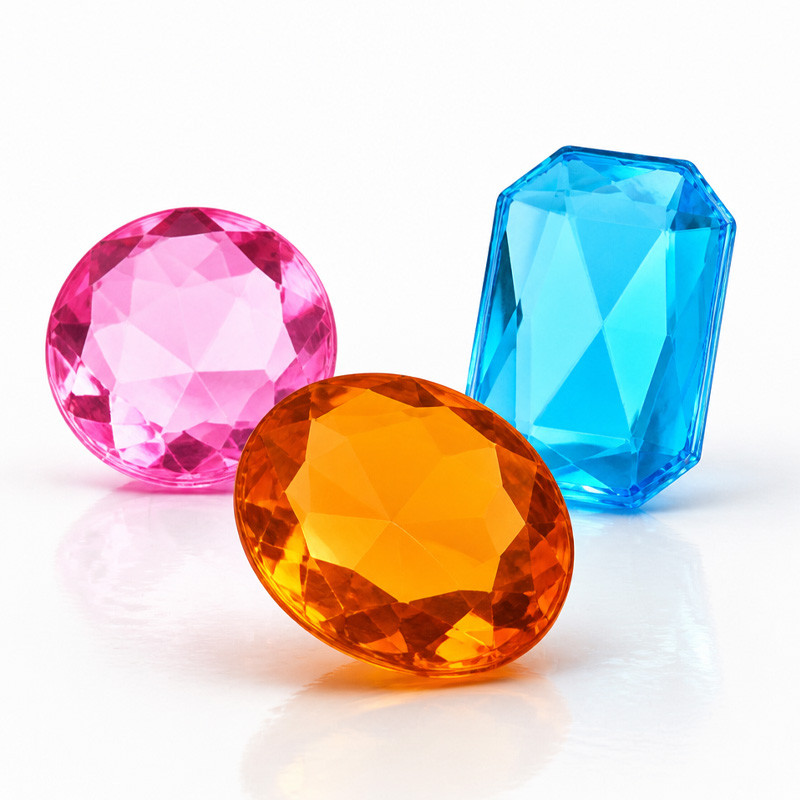
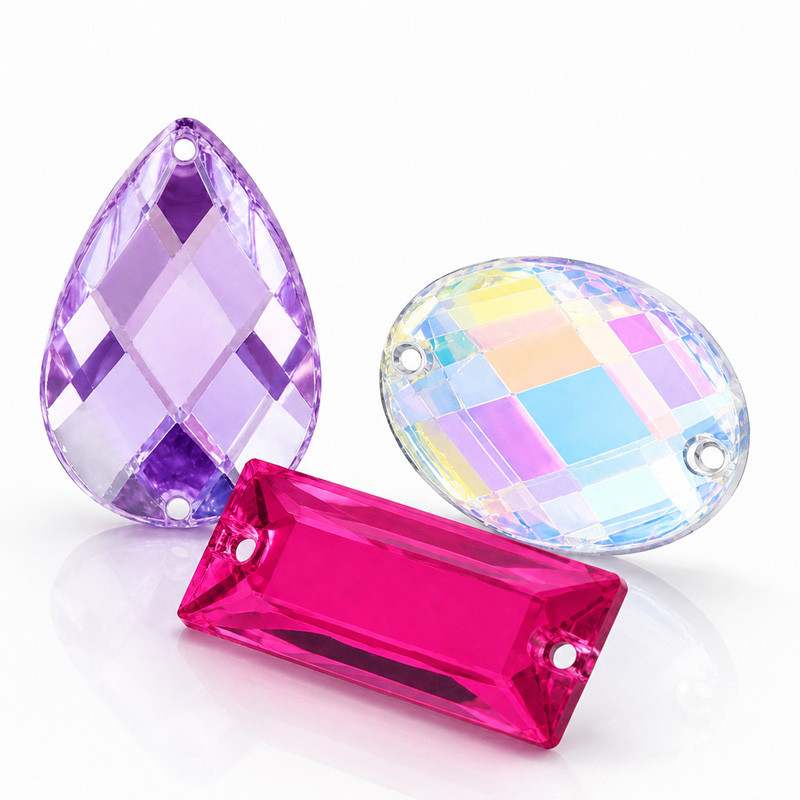
For Crystal Glass, inspect brilliance, colour consistency and surface quality. For Pearl components, examine the coating, shape, colour and surface uniformity. For Claw Rhinestones, check the stone shape, metal setting and overall construction.
Small Trial Batch: Is the Product Consistent Beyond the Sample?
A single sample can look excellent while the actual production batch tells a different story. The next step is to order a small quantity from the intended production specification.
A few hundred pieces can provide a useful initial batch for checking size consistency, colour variation, setting quality, coating and defects across multiple pieces.
If the product requires a custom mould, this is also the stage to confirm whether the supplier can produce the agreed design consistently.
Garment Trial: Does It Work in the Actual Product?
This is the most important stage before committing to bulk volume. Use the trial stones on the intended garment, accessory or production material.
Check the finished appearance, adhesion or setting security, colour under different lighting conditions, durability during handling and whether the components remain stable after the intended care or washing process.
A stone that looks perfect on a sample card may behave differently when applied to stretch fabric, textured fabric or a finished garment.
Bulk Order: Can the Supplier Repeat the Approved Result?
Only after the previous stages have passed should you consider a larger production order.
Confirm the final specification, approved sample, quantity, pricing, lead time, packaging, inspection standard and acceptable defect criteria in writing.
For custom products, make sure the production order references the approved mould, drawing or sample rather than relying on informal descriptions.
What to order at each stage, and what not to bother ordering
One common mistake is ordering too much too early. Another is ordering too little to learn anything useful.
The right quantity depends on the product, the application method, the supplier's existing stock and whether custom tooling is required. There is no universal rhinestone MOQ that applies to every supplier and product category.
| Stage | What to request | What to avoid | Main purpose |
|---|---|---|---|
| Stage 1 | Existing samples, colour options, size references and product specifications. | Large quantities or custom production before confirming the design. | Check appearance and basic suitability. |
| Stage 2 | A small trial batch, potentially a few hundred pieces if the supplier can accommodate it. | Container-level commitments or unnecessary variations of the same specification. | Check batch consistency and manufacturing quality. |
| Stage 3 | Enough stones to decorate representative finished garments and perform relevant tests. | Testing only a few stones on a flat sample card. | Check real application and durability. |
| Stage 4 | Production quantity based on approved demand and confirmed specifications. | Bulk production before sample approval. | Scale with verified confidence. |
How many pieces should you request for a trial?
If you are evaluating standard, ready-made rhinestones, a few hundred pieces may be enough to conduct an initial batch inspection and decorate a limited number of products.
However, the quantity should be calculated from the actual test plan. A garment requiring 300 stones cannot be meaningfully tested with only 50 pieces.
Example: If one garment requires 150 stones and you plan to decorate three test garments, the application requirement alone is 450 stones. Add a reasonable allowance based on your testing needs.
When should you avoid ordering custom variations?
Do not order five colours, four sizes and multiple finishes simply because they are available. Every additional variation increases the amount of inventory you need to inspect and may make the results harder to compare.
Begin with the specification that represents your actual design. Expand the range only after the main product has passed evaluation.
The mould fee conversation: partial refund against volume commitment
Custom Claw Rhinestones create an additional challenge. If your design requires a new claw setting, special shape or non-standard construction, the supplier may need to develop a mould or other production tooling before manufacturing the trial batch.
This means your first order may include two separate costs: the tooling or mould development fee and the actual product manufacturing cost.
First, understand what the mould fee covers
Before negotiating the price, ask the supplier to explain the scope of the tooling charge.
- Is the fee for a completely new mould or a modification to existing tooling?
- Does it include design adjustment, tooling development and initial testing?
- How many sample revisions are included?
- Does the fee cover a functional production mould or only a prototype?
- Who owns or controls the tooling after development?
- Can the mould be used for repeat orders, and are there maintenance charges?
Negotiate a credit against a future order
If the tooling fee makes a small trial order expensive, one possible arrangement is to negotiate a partial or full credit against a future production order.
Instead of asking the supplier to remove the mould fee entirely, discuss a volume-based arrangement. The supplier receives payment for the initial tooling work, while you receive a defined credit after reaching an agreed purchasing quantity or order value.
| Commercial arrangement | How it works | What to confirm |
|---|---|---|
| Full upfront tooling fee | Buyer pays the complete development fee before production. | Tooling scope, ownership and included revisions. |
| Partial tooling credit | A defined portion of the initial fee is credited against a qualifying future order. | Credit amount, qualifying order value and expiry date. |
| Full tooling credit | The supplier agrees to credit the entire tooling fee after a specified volume commitment is reached. | Minimum volume, time limit and payment conditions. |
| Shared development cost | Buyer and supplier agree to divide the development cost. | Payment responsibilities, tooling access and future production terms. |
An example of a volume-based credit
Assume a supplier quotes a hypothetical $500 tooling fee for a custom Claw Rhinestone design. You could propose that $250 be credited against a qualifying future order once cumulative purchases reach an agreed threshold.
Future order credit: $250
Remaining tooling cost after credit: $250
These figures are negotiation examples, not standard market rates or guaranteed supplier terms. The actual arrangement must be agreed in writing.
A message you can send to the supplier
Custom mould fee negotiation
We are interested in developing a custom Claw Rhinestone design, but we would prefer to validate the product through a small trial order before committing to larger production quantities.
Could you please confirm the mould development fee, what is included in the fee, and whether the tooling can be used for repeat orders?
We would also like to discuss whether part of the initial mould fee could be credited against a future bulk order once an agreed purchasing quantity or order value is reached.
Our intention is to establish a long-term supply relationship after the sample and garment testing stages are completed.
How to test on the finished garment, not on a table
This is where many first-time buyers make their biggest mistake. They inspect the rhinestones on a white table, under bright showroom lighting, and assume that the product will perform the same way on the finished garment.
But the final result depends on more than the stone itself. Fabric composition, surface texture, application temperature, pressure, adhesive compatibility and the garment's intended use can all affect performance.
Test the actual application method
If the rhinestones are intended for heat application, use the actual equipment, temperature, pressure and application time planned for production. If they are intended for sewing, setting or another attachment method, reproduce that process instead.
Do not assume that a successful application on a flat test card proves suitability for a stretch fabric, curved surface or finished garment.
Check five things on the finished product
| Test area | What to inspect | Why it matters |
|---|---|---|
| Adhesion or setting security | Whether stones remain securely attached after application and normal handling. | Reduces detachment and repair risk. |
| Colour consistency | Whether the colour matches the approved reference under different lighting conditions. | Protects the intended design appearance. |
| Plating and coating | Whether metal settings and surface finishes show scratches, discolouration or peeling. | Helps identify premature finish problems. |
| Fabric compatibility | Whether the component affects fabric appearance, flexibility or surface condition. | Prevents application problems on the actual material. |
| Care and durability | Whether the decoration remains acceptable after relevant handling, wear or care tests. | Evaluates suitability for the garment's intended use. |
Test according to the product category
Different rhinestone and decorative component categories require different inspection priorities.
- Claw Rhinestones: Inspect the metal setting, claw closure, stone security, plating consistency and whether the setting damages or catches the fabric.
- Crystal Glass: Check brilliance, colour, surface quality, dimensional consistency and how the stones look under the intended lighting.
- Pearl: Check coating uniformity, surface finish, colour matching, shape consistency and resistance to the handling conditions expected in the finished product.
Red flags that justify stopping after stage two
Not every supplier deserves a bulk order. A successful first sample is encouraging, but it is not proof that the supplier can meet your production requirements.
Stage two is an important decision point. If the trial batch reveals serious quality, communication or manufacturing problems, there is little reason to spend more money on garment testing or larger production quantities.
Red flag 1: The trial batch does not match the approved sample
Differences in colour, dimensions, shape, finish or construction may indicate that the supplier has not controlled the production specification properly.
Red flag 2: The supplier cannot explain quality differences
Some variation may occur depending on the material and manufacturing process. However, a reliable supplier should be able to explain the cause, identify the affected batch and propose a corrective action.
Red flag 3: Piece counts or specifications are unclear
If the supplier cannot clearly confirm quantities, dimensions, material or the basis of the quotation, you cannot make a reliable purchasing comparison.
Red flag 4: Custom tooling terms keep changing
Be cautious if the mould fee, revision charges, ownership arrangements or future credit terms change after discussions have started. These details should be documented before development begins.
Red flag 5: The supplier pressures you to commit before testing
A supplier may have legitimate MOQ and production scheduling requirements. However, refusing to clarify specifications, sample procedures or quality standards while insisting on a large order increases your risk.
Stop-and-review checklist
- The trial batch differs materially from the approved sample.
- Repeated defects appear without a clear corrective action.
- The supplier cannot confirm the actual production specification.
- Tooling charges or ownership terms remain unclear.
- Replacement and quality responsibility are not documented.
- The supplier refuses reasonable clarification about the production process.
If any of these issues remain unresolved, pause the purchasing process and request clarification or corrective samples before moving forward.
What a realistic first-order budget looks like
Your first-order budget should cover more than the price of the rhinestones. Depending on the product and testing requirements, you may need to account for sample charges, custom tooling, trial production, shipping and garment testing.
The most useful approach is to separate the budget into stages. That way, you know how much money is at risk before you receive enough evidence to proceed.
Budget category 1: Existing product samples
If you are evaluating standard Crystal Glass or Pearl products, start by asking whether the supplier can provide existing samples. You may only need a limited selection of sizes, colours and finishes.
The cost may include sample charges, courier fees and any preparation or handling charges.
Budget category 2: Small trial production
Once you have selected the product specification, request a small batch suitable for inspection and application testing.
The cost depends on the number of pieces, production setup, MOQ, packaging and whether the supplier needs to manufacture the items specifically for you.
Budget category 3: Custom mould development
Custom Claw Rhinestones may require tooling development. This can become the largest additional cost in the first-order process, particularly when the design is completely new.
Ask for a separate tooling quotation instead of allowing the mould fee to be hidden inside the unit price. This makes it easier to negotiate future credits and compare suppliers.
Budget category 4: Garment testing and logistics
Include the cost of the fabric or garments used for testing, application labor, inspection, shipping and any additional testing required for the intended use.
| Budget item | Standard product trial | Custom Claw Rhinestone trial |
|---|---|---|
| Existing product samples | Usually relevant | Useful if a comparable reference exists |
| Sample shipping | Include | Include |
| Trial batch production | Include | Include |
| Custom mould fee | Usually not required for standard stock | May be required |
| Garment application test | Include | Include |
| Inspection and rework allowance | Include | Include |
An illustrative first-order budget
The following is an example planning budget in USD for a buyer evaluating an existing product and a separate custom tooling scenario. These are budgeting assumptions, not standard supplier prices or G&J quotations.
| Cost category | Standard product trial | Custom mould trial |
|---|---|---|
| Samples | $30–$80 | $40–$100 |
| Trial product batch | $50–$150 | $80–$200 |
| Tooling / mould development | $0 | $200–$600 |
| Shipping and handling | $30–$80 | $30–$100 |
| Garment testing allowance | $30–$100 | $40–$120 |
| Illustrative total | $140–$410 | $390–$1,120 |
Actual costs may fall outside these ranges depending on the supplier, product specifications, tooling complexity, quantity, courier destination and testing requirements. Some suppliers may waive or credit sample charges against a later order, while others may have minimum production charges.
How to control the financial risk
- Separate sample, tooling, production and shipping costs.
- Ask for a quotation at each stage rather than accepting one large bundled estimate.
- Negotiate future tooling credits where appropriate.
- Limit the number of colours and specifications in the first trial.
- Define clear pass-or-fail criteria before ordering.
- Move to the next stage only after the current stage meets your requirements.
Test First. Scale With Confidence.
The most expensive order in a buyer's history is the one scaled to production before a single finished garment was tested. A trial batch of a few hundred pieces costs less than one ruined production run, and it is the only stage where adhesion, colour and plating are tested under real conditions.
Whether you are sourcing Claw Rhinestones, Crystal Glass or Pearl components, a structured trial order can help you verify product quality, production consistency and application performance before committing to larger quantities.
Discuss your target design, trial quantity and production requirements with G&J to explore a suitable sampling and quotation plan.
DISCUSS YOUR TRIAL ORDERFrequently Asked Questions
What is a normal MOQ for rhinestones if I only need a few hundred pieces to test?
How do I test a rhinestone supplier before placing a bulk order?
Can I order a small trial batch of custom Claw Rhinestones with my own mould?
Should I pay a mould fee before ordering custom rhinestones?
How many rhinestones do I need for a garment trial?
What should I check before approving a rhinestone sample?
What if the trial batch does not match the original sample?
Is a small trial order always cheaper than a bulk order?
When should I move from a trial order to bulk production?
Purchasing Notes and Budget Assumptions
MOQ: Rhinestone minimum order quantities vary by supplier, product category, specification, production process and stock availability. The quantities discussed in this article are suggested trial-planning examples, not universal industry standards.
Tooling: Custom mould development fees, ownership rights, revision policies and future order credits are subject to individual supplier agreements.
Budget: All example budget figures are hypothetical planning estimates in USD. They are not actual supplier quotations, verified market averages or G&J price commitments.
Product scope: This article covers Claw Rhinestones, Crystal Glass and Pearl components. Actual product suitability should be verified through approved samples and application testing.