
How to Choose a Reliable Rhinestone Manufacturer for Your Brand
Why a 20% Lower Rhinestone Quote Is Usually the More Expensive One
Stop comparing pack prices. Convert every quote to cost per 1,000 stones, then include stone loss, rework and the real cost per finished garment.
You have two rhinestone quotes in your inbox. Supplier A offers $0.30 per pack. Supplier B offers $0.24 per pack. The second quote is 20% lower, so it looks like the obvious choice.
But what does one pack contain? Is the price based on weight, piece count or a length of transfer? Are both suppliers quoting the same stone size, material, finish and construction? And what happens when stones arrive chipped, vary in size or fall off during application?
For garment manufacturers and fashion brands, the useful comparison is not the price printed beside a pack. It is the cost per 1,000 usable stones and, ultimately, the cost per finished garment.
Three ways suppliers quote the same stone — and why they are not comparable
Rhinestone suppliers may quote by pack, by gram or by meter. Each method can be reasonable for a particular product format, but the numbers describe different quantities. Comparing them without conversion is like comparing the price of a bottle with the price of a kilogram.
Price per pack
Pack pricing is common for loose stones and standard wholesale SKUs. The key question is the number of stones in each pack. A 1,000-piece pack and a 1,500-piece pack are not equivalent, even if the first has a lower-looking price.
Price per gram
Weight-based pricing may be used for small loose stones or mixed components. The number of stones in one gram changes with stone diameter, material, backing and construction. Ask the supplier for the expected piece count per gram for the exact SKU.
Price per meter
Meter pricing may apply to rhinestone bands, trims, chains or pre-set strips. The value depends on the number of stones per meter, spacing, backing and whether the quoted length includes usable end sections.
These numbers are not directly comparable. A pack may contain 1,440 stones, while 1 gram can be only about 200 stones. Always convert them to a common unit: cost per 1,000 stones.
Convert first: pack price → price per 1,000 stones → cost per finished garment
Use one common unit before discussing which supplier is cheaper. For loose stones, cost per 1,000 pieces is a practical starting point. Then calculate how many stones each garment needs and add the costs required to turn those stones into an acceptable finished product.
For weight-based quotes, use the confirmed pieces per gram. For meter-based quotes, use the confirmed pieces per meter.
Worked example: the 20% lower pack quote
The following figures are illustrative. Assume both suppliers claim to offer the same stone specification, but their pack quantities differ:
| Quote detail | Supplier A | Supplier B |
|---|---|---|
| Price per pack | $0.30 | $0.24 |
| Stones per pack | 1,440 | 960 |
| Price per 1,000 stones | $0.208 | $0.250 |
| Pack price impression | Higher price | 20% lower price |
| Actual normalized result | Lower cost per 1,000 | About 20% higher per 1,000 |
Supplier B's pack is cheaper, but it contains fewer stones. After conversion, Supplier B costs $0.250 per 1,000 stones, compared with approximately $0.208 from Supplier A.
Move from stone cost to garment cost
Next, multiply the normalized price by the number of stones used on one garment. If a design uses 1,200 stones, the material cost at the example rates is approximately $0.25 from Supplier A and $0.30 from Supplier B — before loss, application labor, freight or inspection.
Use the actual approved design count and distinguish stones purchased from stones successfully applied.

The four cost lines a low quote usually leaves out
A quote can look competitive because it lists only the stone price. Your landed and production cost may also include four additional lines.
1. Usable quantity and stone loss
A pack's stated quantity is not necessarily the same as the quantity that can be used in production. Chips, cracks, uneven backs, inconsistent sizes or missing pieces can reduce usable output. Ask whether the quoted count is a packed count, an inspected count or a guaranteed usable count.
2. Sorting, inspection and rework labor
If stones need extra sorting, workers spend time separating acceptable pieces from defects. If stones detach during application or fail inspection, the garment may need repair or partial rework. Labor cost can quickly exceed the original difference in stone price.
3. Freight, packing and handling
Compare the same delivery basis. Include packaging, protective materials, freight, insurance where applicable, customs duties, taxes and local handling charges.
4. Quality variation and finished-product risk
Differences in color, size, brilliance, coating, setting or adhesion can affect the appearance of the finished garment. A batch that does not match the approved sample may create inspection delays, customer complaints, returns or replacement work.
What a 2% stone-loss rate costs you in rework hours
Two percent can sound small on a supplier quotation. On a production run, it represents a real number of stones that may need to be replaced, re-applied or checked.
A simple production example
Assume an order of 500 garments, with 1,000 stones applied to each garment. The production run therefore uses 500,000 stones. If 2% of the applied stones are lost or need replacement, the affected quantity is 10,000 stones.
Now assume a trained worker needs an average of 30 seconds to identify and replace each affected stone. That is 300,000 seconds, or approximately 83.3 labor hours. At an illustrative loaded labor rate of $18 per hour, the direct rework labor is about $1,500.
Example: 10,000 × 30 ÷ 3,600 = 83.3 hours.
Example: 83.3 × $18 ≈ $1,500. This excludes production stoppage, additional inspection, scrap and delayed shipment.
A one-page comparison sheet to send both suppliers
The fastest way to avoid an incomplete comparison is to send both suppliers the same request. Ask them to complete the same fields for the exact product specification.
Copy-and-send supplier comparison request
- Product category and exact SKU: Claw Rhinestones, Crystal Glass, Acrylic or Resin.
- Material, shape, size, color, finish and construction details.
- Quoted unit and price: per pack, per gram, per meter or per piece.
- Confirmed pieces per pack, pieces per gram or pieces per meter.
- Calculated price per 1,000 stones and counting method.
- Expected usable quantity and stated defect or loss allowance.
- Sample availability, sample charge and approval procedure.
- MOQ, price breaks, packaging details and production lead time.
- Freight terms, estimated shipping cost and additional charges.
- Inspection standard, replacement policy and responsibility for rework.
Use this comparison table internally
| Comparison field | Supplier A | Supplier B |
|---|---|---|
| Exact SKU / specification | __________ | __________ |
| Quote unit and unit price | __________ | __________ |
| Pieces per quoted unit | __________ | __________ |
| Price per 1,000 stones | __________ | __________ |
| Expected usable quantity / loss rate | __________ | __________ |
| Estimated rework hours and cost | __________ | __________ |
| Freight, packing and other charges | __________ | __________ |
| Estimated cost per finished garment | __________ | __________ |
| Sample approved? | Yes / No | Yes / No |
For the final row, use one consistent garment design and production quantity. Include the stones required, expected loss, labor for application and repair, and allocated freight and handling cost.

When the cheaper quote is genuinely the right choice
A lower quote is not automatically a warning sign. It may be the better commercial choice when both suppliers are quoting the same specification, the count basis is verified, samples meet your requirements and production results show comparable usable yield.
A lower price may be credible because the supplier has more efficient production, better material purchasing terms, suitable stock, a simpler packing method or a production process designed for your order volume.
The lower quote is worth choosing when:
- Both offers match on material, size, shape, color, finish and construction.
- The number of stones per pack, gram or meter is confirmed and repeatable.
- Samples pass your application, appearance and durability checks.
- Observed stone loss and rework time are within your production tolerance.
- Freight, packaging, duties and other charges are included on the same basis.
- The supplier can support the required quantity and delivery schedule.
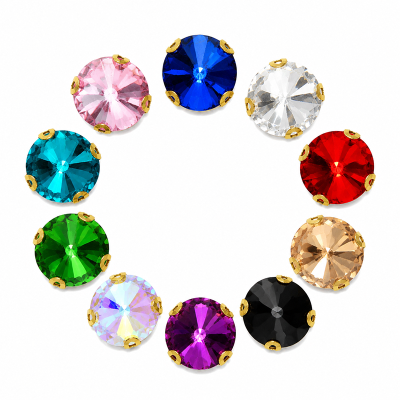
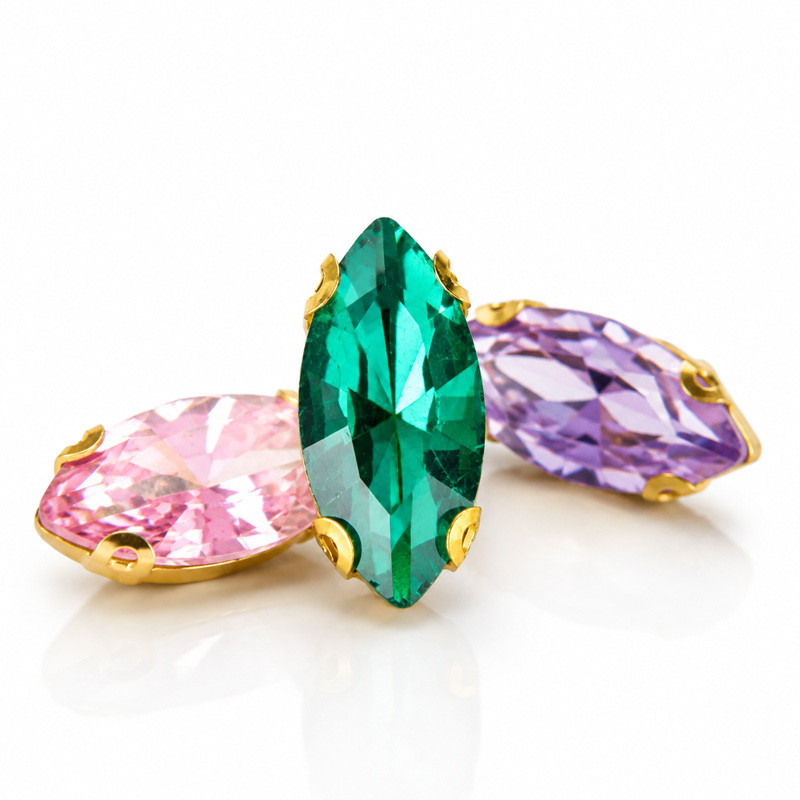
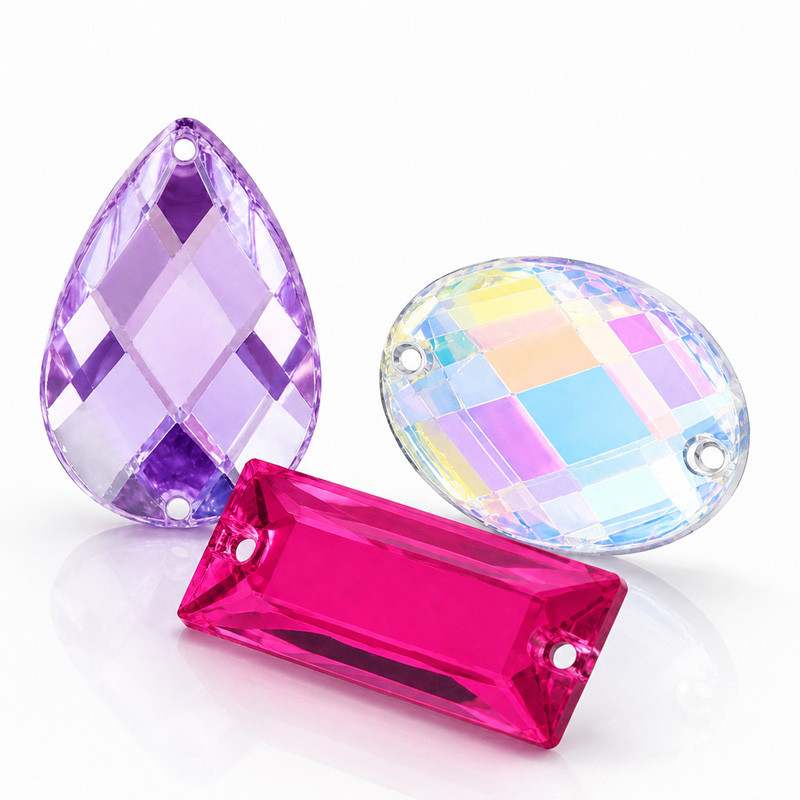
This is particularly important when comparing different product families. Claw Rhinestones, Crystal Glass, Acrylic and Resin components can differ in material behavior, weight, setting structure and application requirements.
Compare the Cost That Reaches the Finished Garment
A quote that is 20% lower per pack is rarely 20% cheaper. Once both quotes are converted to cost per 1,000 stones and the rework cost of a higher stone-loss rate is added, the cheaper quote is often the more expensive one — the only fair number to compare is cost per finished garment.
G&J supplies a range of rhinestone and jewelry accessory components, including Claw Rhinestones, Crystal Glass, Acrylic and Resin options. Share your target specification and quantity to discuss a like-for-like quotation.
REQUEST A LIKE-FOR-LIKE QUOTEFrequently Asked Questions
How do I compare rhinestone prices when one supplier quotes per pack and another per gram?
Is a cheap rhinestone actually cheaper?
How do I calculate the real cost per stone for a decorated garment?
How much does a 2% rhinestone loss rate cost?
Should I compare Claw Rhinestones, Crystal Glass, Acrylic and Resin by the same price formula?
What should I ask a rhinestone supplier before accepting a low quotation?
When should I place a pilot order instead of choosing the lowest quote?
Sources and Calculation Notes
Calculation framework: The unit conversions and cost-per-garment formulas in this article are purchasing calculations. Buyers should use supplier-confirmed piece counts and their own production data.
Illustrative example: The $0.30 and $0.24 pack prices, pack quantities, 2% loss rate, 30-second repair time and $18 hourly labor rate are hypothetical assumptions for explaining the method. They are not G&J quotations or industry averages.
Product scope: Claw Rhinestones, Crystal Glass, Acrylic and Resin are referenced as product categories. Confirm the current SKU specification, availability, MOQ, pricing, lead time and application suitability with the supplier.
Verification note: Before making a purchasing decision, verify that both suppliers quote the same specification and delivery basis. Record sample approval, inspection criteria, usable yield, rework responsibility and additional charges in writing.